
Greek Ladolemono (Traditional Greek Lemon Olive Oil Dressing)

If you are looking for THE authentic Greek dressing, ladolemono is one of the simplest and most traditional forms. Made with extra virgin olive oil, fresh lemon juice, oregano and salt, this Greek lemon olive oil dressing is a staple in Greek kitchens.
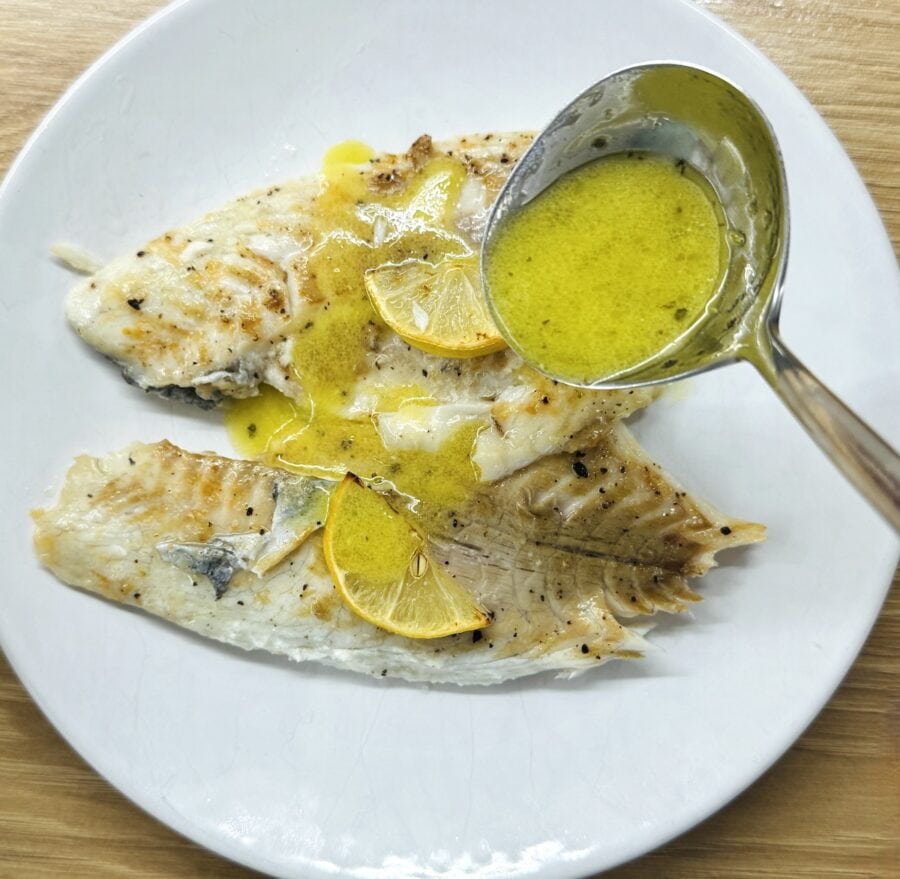
I can say that I grew up with ladolemono. It was never something we thought of as a special dressing or a special recipe. We made it right before sitting down to eat and used it on just about everything. From simple green salads and horta (wild greens) to grilled fish, meat, boiled vegetables and roasted potatoes, ladolemono is like a “condiment” it’s always present.
As a registered dietitian raised on the traditional Mediterranean diet, I love how much this simple dressing says about the way we eat in Greece. It is not about complicated sauces but a simple dressing that brings out the flavor of the food.
What Is Greek Ladolemono?
Ladolemono (λαδολέμονο, pronounced lah-thoh-LEH-moh-noh) literally combines two Greek words: ladi, meaning oil, and lemoni, meaning lemon. It is a traditional Greek lemon and olive oil dressing or sauce that is used throughout Greek cooking.
Unlike many bottled Greek dressings found in grocery stores, traditional ladolemono does not need vinegar, mustard, honey or other additions. Its foundation is extra virgin olive oil and freshly squeezed lemon juice. Dried oregano and a little salt are for flavor.
The result is a bright, slightly tangy dressing with the richness of olive oil and the freshness of lemon. It is simple but trust me it makes a difference.
And while you might think of it as a salad dressing, in Greece we use it for much more than salads.
Why This Greek Dressing Is Different
Many commercial Greek dressings are made with vinegar, additional seasonings and sometimes ingredients such as mustard or sweeteners. Traditional Greek ladolemono does not.
The combination of extra virgin olive oil and lemon is what defines it. Oregano and salt add flavor, but the olive oil and lemon are the essential ingredients.
This is also what makes ladolemono so versatile. Rather than being a dressing reserved for one type of salad, it is used throughout everyday Greek cooking, from vegetables and beans to fish and meat.
How We Use Ladolemono in Greece
It is not reserved for one particular dish. It is something you can prepare in minutes and use to finish an entire meal.
Here are some of the most common ways to enjoy it:
1. On grilled fish and seafood
Ladolemono sauce is a classic accompaniment to grilled fish in Greece. It is often served spooned over grilled fish, bring out the flavor of the fish without overpowering it. It is also wonderful with grilled shrimp and other seafood.
2. Over boiled vegetables and greens
Greeks love their boiled vegetables, particularly seasonal wild greens (horta), zucchini and other vegetables. A generous drizzle of ladolemono over warm vegetables is all they need. This is a particularly good example of how a simple preparation can turn an everyday vegetable into a delicious dish.
3. On green salads
Ladolemono is wonderful on simple green salads, like maroulosalata. The lemon adds freshness while the olive oil gives the salad richness. You really do not need a complicated dressing when you have good olive oil and fresh lemon.
4. With roasted and boiled potatoes
Potatoes and lemon are a natural combination in Greek cooking. Use ladolemono over boiled potatoes or as a finishing touch for roasted potatoes.
5. Over beans and vegetable dishes
I also like using this combination to finish bean dishes and other vegetable-based meals. A little fresh lemon and olive oil can brighten the flavors of lentils, gigantes (Greek giant beans) and other cooked beans.
What Makes a Good Greek Ladolemono?
Because ladolemono has so few ingredients, their quality really matters.
Extra virgin olive oil: This is the foundation of the dressing. Use a good-quality extra virgin olive oil, preferably one you enjoy tasting on its own. In traditional Greek cooking, olive oil is not simply a small addition for flavor. It is a central ingredient, and ladolemono is a perfect example of that.
Fresh lemon juice: Always use freshly squeezed lemon juice rather than bottled lemon juice. It gives the dressing its characteristic freshness and acidity. The amount of lemon can also be adjusted depending on how tart you like your dressing.
Dried oregano: Oregano is a familiar flavor in Greek cooking and gives ladolemono its characteristic herbal aroma. Greek dried oregano is particularly aromatic. You can rub it lightly between your fingers before adding it to release more of its fragrance.
Salt: A little salt brings the flavors together. Adjust it according to what you are serving the dressing with.
How to Make Ladolemono
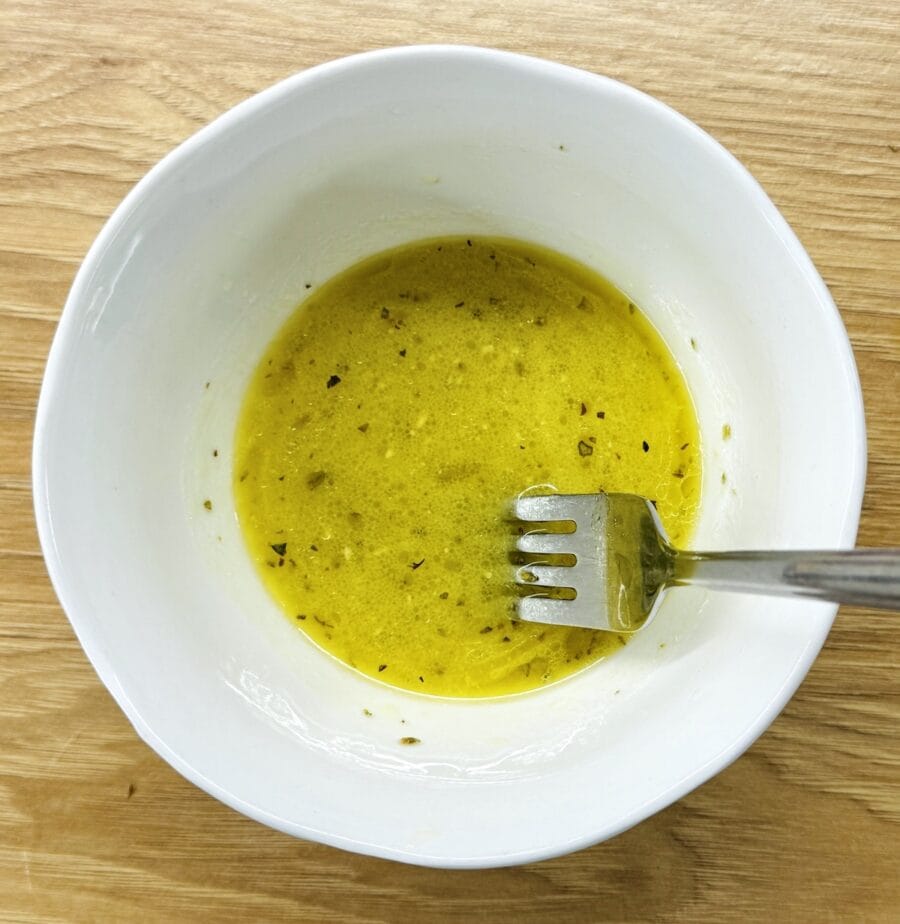
There are a few small things that make a difference when preparing this dressing.
- Use good olive oil. Since olive oil makes up the largest part of the dressing, its flavor will come through. This is not the place to use an oil you would not enjoy eating on its own.
- Make it fresh. Ladolemono takes only a minute or two to prepare, so don’t make it in advance
- Mix it well. Olive oil and lemon juice naturally separate. Whisk or shake them together just before serving to temporarily combine the ingredients.
- Adjust to your taste. Some people prefer a more lemony dressing, while others like the richness of the olive oil. I have the typical ratios in the recipe below.
A Dietitian’s View: Is Greek Ladolemono Healthy?
Ladolemono is a good example of how traditional Greek cooking uses simple ingredients that also contribute to a healthy eating pattern.
Extra virgin olive oil is rich in monounsaturated fats and contains naturally occurring polyphenols and other antioxidant compounds. It is the primary fat in the traditional Mediterranean diet and has been associated with several health benefits, particularly for cardiovascular health.
Lemon juice adds freshness and flavor and vitamin c which is also an antioxidant and oregano contributes aromatic plant compounds as well.
Greek Ladolemono (Traditional Greek Lemon Olive Oil Dressing)
Ingredients
- 6 tbsp extra virgin olive oil
- 2 tbsp fresh lemon juice
- 1 tsp dry oregano
- 1 pinch of salt
Instructions
- In a small bowl, whisk together lemon juice, olive oil, and a pinch of salt until it thickens. Stir in the oregano.
