
6 Insider Tips for Buying Feta Cheese – Like a Greek

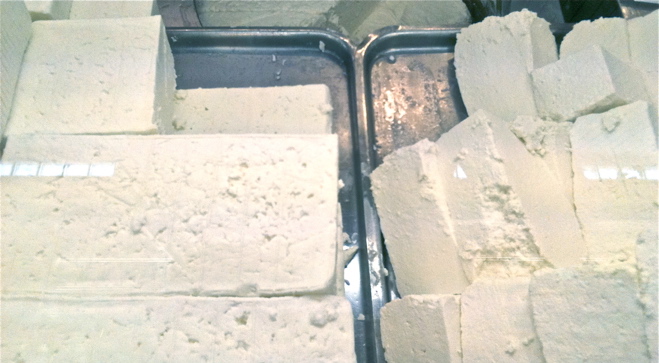
This post was a bit difficult to write in the sense that when you have been eating feta since you were a baby like I have, you just know what is good feta and what is bad feta and so putting certain rules on how to choose it seems a bit unnatural to me. But there are certain things you need to know, especially if you are new to feta.
First I need to say that Greeks know their cheese; several statistics place the Greeks as the highest consumers of cheese in the world (French come second). Yes, it appears that the average Greek consumes about 50-65 pounds (23-30 kg) of cheese a year. Blame it on the feta; at least half of that cheese consumed is feta.
So here are some points to keep in mind when choosing feta.
Rule #1: Make sure it only contains sheep’s milk (and maybe some goat’s milk), rennet and salt.
It should not contain anything else nor should it contain cow’s milk. Feta made with cow’s milk can crumble easily (that’s not a good thing), may develop a sour taste and does not leave a pleasant aftertaste. Also it is more likely to become mushy and have a bad odor.
Rule #2: Look for feta made in Greece-it’s the only one that is real feta.
I’m not saying this because I am Greek, but legally this is the case. I’ve been reading all sorts of articles, wrongly describing feta as a white, salty cheese made in different parts of world with different types of milk and various countries claiming ownership. As I mentioned in the previous post, feta is Greek and it is acknowledged as that by the European Commission due to a variety of factors. If you want feta, choose Greek, if you want some sort of salty white cheese-you can choose something else.
Rule #3: Taste it.
If you have the luxury of being able to taste the cheese before you buy it, than do so. There are 3 different types of feta based on the texture: hard, medium-hardness and soft. There are also different aromas: some are saltier, some are spicy and some are mild. This all depends on what area and in what kind of container the feta is matured. Most Greek people have a favorite feta and they always buy that one. But you can also use different types of feta for different recipes. For example feta for a cheese pie- tyropita maybe a bit saltier -I’ll talk about how to eat and how to use feta in the next post.
Rule #4: Feta should be white-not yellowish.
If it is a bit yellow, that means that the cheese has been exposed to air outside of the brine.
Rule #5: Feta should have a tangy flavor and a rich aroma.
It should not taste bitter, sour, rancid, chalky, tasteless.
Rule #6: Feta should have a few tiny holes on the surface.
Once you get your hands on some good feta, check out this article for yummy ways to use it.
Some comments:
*I often read that pregnant women should avoid feta because it is made from unpasteurized milk, this is not true, almost all feta on the market (Greek) is pasteurized.
* You may find the fact of cheese sitting in this milky salt water not very appetizing, but it is necessary to keep it from going bad.

Interesting article. I live in the states, where can I buy real feta cheese?
Thank You