
The Best Fish to Eat: What You Need to Know

We often hear about how fish is such an important part of the Mediterranean diet, and it is. But I want to clear up a few misconceptions, because most people misunderstand the role of fish in the Mediterranean diet. And once you understand the real story, eating more fish actually becomes a lot easier and more affordable.
The Mediterranean Diet and Fish: What It Really Looked Like
Here’s something that may surprise you: people in the Mediterranean did not eat fresh fish every day, or even every week. Yes, another Mediterranean diet misconception.
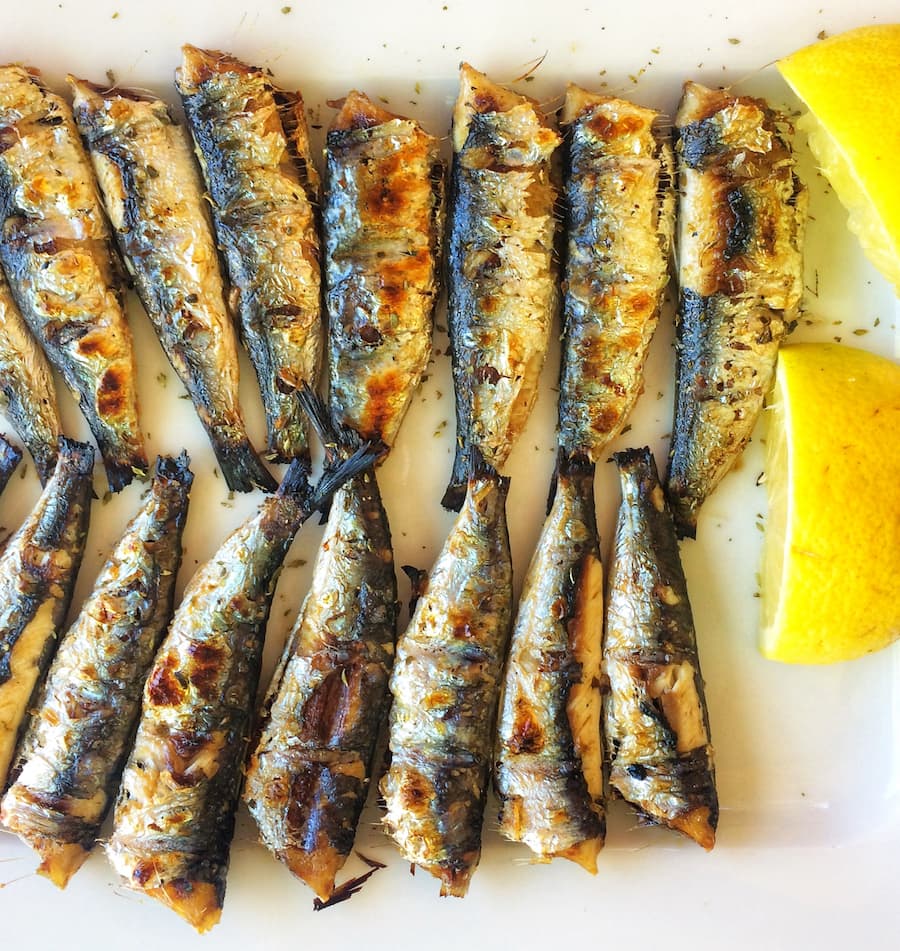
Greece, for example, is about 80% mountainous. The people who lived in those mountainous regions (like my grandparents), and that was a large portion of the population did not have easy access to fresh fish all year. I remember the fishmonger came once or twice a week in summer, less often in the winter, sometimes not at all. So instead, they preserved fish. They ate cured and marinated fish, consumed mostly as a side dish alongside beans or vegetables. A classic example: marinated sardines with a bowl of lentil soup. Simple (but nutritious) combinations with what they had available.
The fish that Greeks and other Mediterranean people consumed was mainly small and fatty: sardines and anchovies. These were the fish of the traditional Mediterranean diet. Not salmon, which does not exist in the Mediterranean Sea and was never part of the traditional diet. Sardines and anchovies, small, oily, affordable, and full of mega-3’s.
The point is: you do not need to search for expensive fresh fish to follow the Mediterranean diet. Even the Mediterraneans didn’t do that.
Why Omega-3 Fatty Acids Matter
Before I get into specific fish, let’s talk about omega-3 fatty acids, because they are really at the heart of why fish is so important in this diet.
Omega-3 fatty acids are essential fatty acids, that means our body needs them to function but cannot make them on its own, so we must get them from food. They protect the heart and have been associated with a reduced risk of heart attacks, strokes, and cardiovascular-related deaths. Research also shows that people who consume more omega-3 fatty acids from food have a lower risk of dementia and Alzheimer’s disease, along with improved cognitive function. And they are well-known for their anti-inflammatory properties which is important because chronic inflammation is linked to so many serious diseases.
In the traditional Greek diet, omega-3s didn’t come only from fish. Wild greens, walnuts, and even meat and dairy from grazing animals were all sources. But the small fatty fish, sardines and anchovies were a consistent and significant source. This is one of the reasons the traditional Mediterranean diet has been associated with longevity.
Sardines: One of the Best Fish You Can Eat
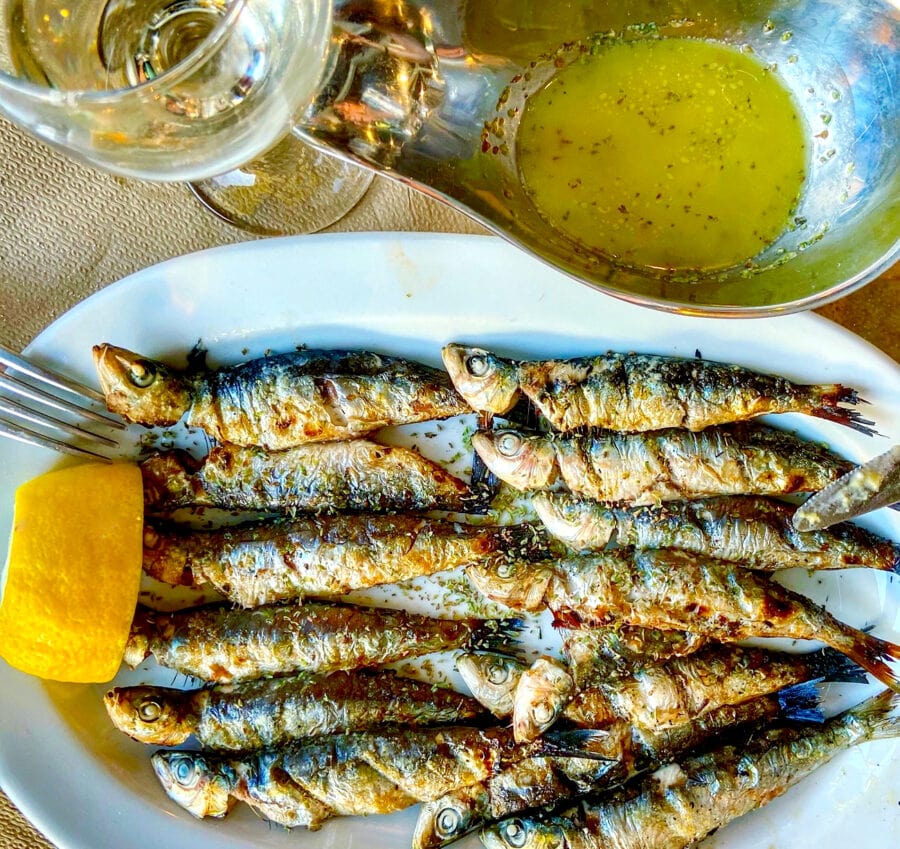
In my opinion, the humble sardine is one of the best fish, actually one of the best foods you can eat. I know many people have mixed feelings about them, but I truly believe it comes down to how you prepare them.
Why Sardines Are So Good for You
Sardines are a fatty fish and an excellent source of omega-3 fatty acids. Because they are typically eaten whole bones and all, especially from a can, they are also a wonderful source of calcium and vitamin D, which is somewhat rare. They are rich in protein, vitamin B12, selenium, and iron.
And because sardines are small fish that feed low on the food chain, they accumulate very little mercury. This makes them one of the safest fish you can eat, and one you can include in your diet several times a week without concern. They are also one of the most affordable protein sources available. You truly can eat well without spending a lot of money.
It should be noted: the canning process does not destroy omega-3 fatty acids. Canned sardines are just as good for you as fresh.
How to Eat Sardines
Stop considering canned fish a poor man’s food, it is rich in essential fatty acids, and it is exactly what people in the Mediterranean have eaten for generations.
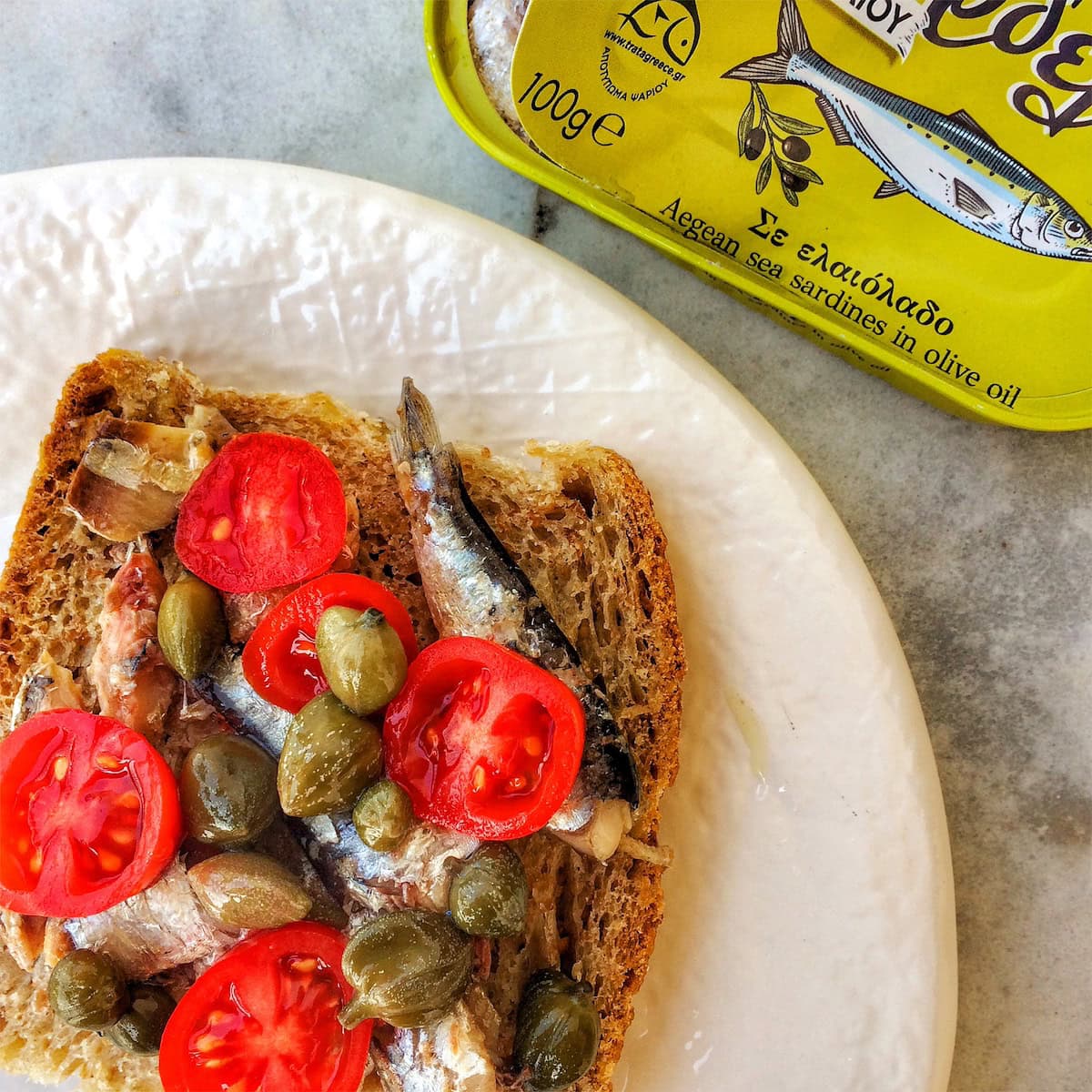
When buying canned sardines, choose those packed in olive oil. The olive oil seals in the flavor and makes them tastier. Here are some easy ways to enjoy them:
- Open the tin, squeeze over some lemon juice, add a few capers and some oregano. Eat with good bread and olives. That’s it.
- Heat them in a pan with some tomato, onion, and a drizzle of olive oil. Serve with bread or over rice.
- Roast them in the oven with cherry tomatoes, sliced onion, olive oil, and dried oregano at 200°C / 400°F for 15–17 minutes. This is a real main course.
- Toss them through pasta with garlic, olive oil, chili flakes, sundried tomatoes, and parsley, a classic of southern Italian cooking.
- Serve them on toast with tomato, greens, and a sprinkle of pepper.
- Add them to salads they are wonderful with chickpeas, tomato, cucumber, and olives. In traditional Greek cuisine, it is very common to combine small fish with beans.
Fresh sardines, when you can find them, have a mild, delicate flavor. Grilled fresh sardines dressed with olive oil and lemon are one of the great pleasures of a Greek summer. But fresh is not necessary canned is good also.
Anchovies: The Most Underestimated Fish on the Table
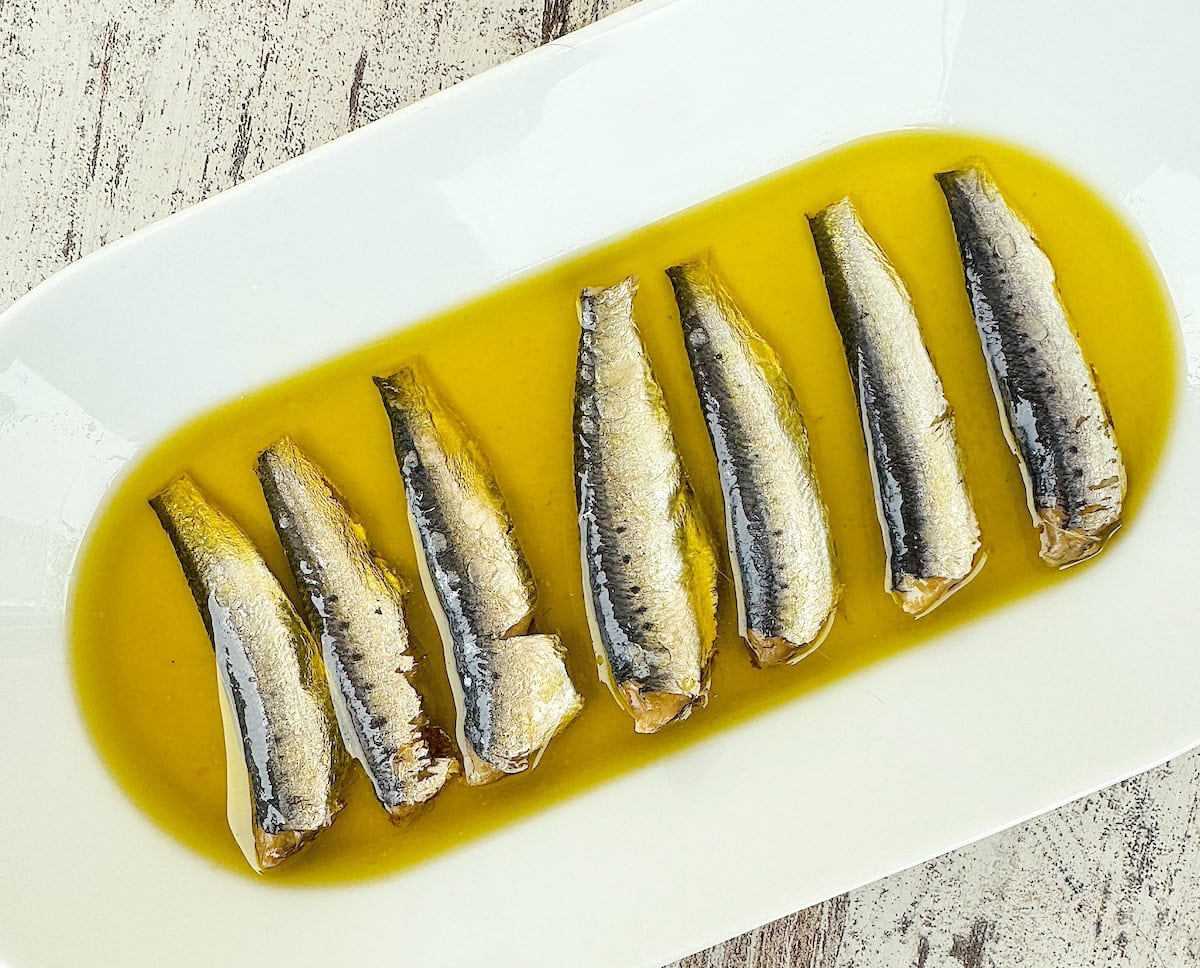
If sardines are underestimated, anchovies are even more so. Most people know anchovies as that salty, pizza topping. But that is a very limited view of what anchovies can do.
Why Anchovies Are So Nutritious
Anchovies are, like sardines, a small fatty fish rich in omega-3 fatty acids, protein, vitamin B12, selenium, and iron. Eaten whole, they also provide calcium. And like sardines, they are very low in mercury.
Anchovies in the Greek and Mediterranean Tradition
Sardines and anchovies were the main type of fish preserved in the traditional Mediterranean diet, and they were eaten either as an accompaniment to beans and vegetables or as a meze. In Greece, gavros marinatos (marinated fresh anchovies cured in lemon juice and olive oil) is a classic mezze that, if you have ever had it with a cold glass of ouzo by the sea, you know exactly what I am talking about. Salt-packed anchovies traveled inland to villages that had no access to the coast.
How to Use Anchovies
- Melt a few anchovy fillets in olive oil with garlic at the start of a pasta sauce or braise — they dissolve completely and give everything a deep, savory richness
- Lay a few fillets over a salad of tomatoes, cucumbers, and olives with olive oil and lemon.
- Serve them on grilled bread with fresh tomato, olive oil, and capers.
- Pair them with chickpeas or lentils, a very typical combination in Greece.
- Make gavros marinatos if you can find fresh anchovies: cure them in lemon juice, then cover with olive oil, garlic, and herbs. They will last two weeks in the refrigerator and are absolutely addictive.
Get the recipe here: Greek Cured and Marinated Anchovies – Gavros Marinatos
For canned anchovies, look for those packed in olive oil.
Salmon: Great for Omega-3s, but Not a Mediterranean Fish
I want to be clear about something. Salmon is an excellent source of omega-3 fatty acids, one of the best available. It is rich in protein, B vitamins, selenium, and astaxanthin, a powerful antioxidant. It is easy to prepare, versatile, and widely available. If you enjoy salmon, by all means eat it.
But salmon does not exist in the Mediterranean Sea. It was not part of the traditional Mediterranean diet. Sure, you can try salmon, and I would say go ahead, but the cheaper sardines and anchovies, as the Greeks traditionally ate, will do the trick just as well. And they are lower in mercury, more affordable, and probably better for the environment.
If you do cook salmon, keep it simple: grilled or roasted with olive oil, lemon, garlic, and herbs. Served with a salad or roasted vegetables. That’s all it needs.
Cod: Lean Protein and a True Mediterranean Staple in Its Preserved Form
Fresh cod is not strongly associated with the Mediterranean tradition. But salt cod absolutely is. For centuries, salt cod was one of the primary ways that inland communities accessed fish. Salt cod is salted cod that needs to be rehydrated and desalted before you cook it. It kept for months without refrigeration and traveled far. Traditional dishes like Greek bakaliaros skordalia , Portuguese Bacalhau à Brás and Italian baccalà alla Napoletana are part of authentic Mediterranean cuisine.
Nutritionally, cod is an excellent lean protein but is low in fat and does not provide significant omega-3 fatty acids. If omega-3s are your goal, it won’t get you there. But it is a mild, versatile fish that pairs well with simple Mediterranean flavors, and in its preserved salt-cod form, it is genuinely traditional.
Herring: Not a Mediterranean Fish, but Part of the Greek Table
Herring does not swim in the Mediterranean or the Aegean as it is a Northern European fish. And yet smoked and salted herring, known in Greek as renga has been part of Greek food culture for a very long time. So while it is not native to the Mediterranean, it is consumed as a preserved fish.
Renga is consumed in a similar way as cured anchovies or sardines, as a side dish alongside beans, particularly lentils or chickpeas, but also as a meze.
Nutritionally, herring is a good source of omega-3 fatty acids, B vitamins, and selenium. It does have slightly higher mercury levels than sardines and anchovies, still within safe limits for most people eating it occasionally and its salt content when cured means it is more of an accompaniment than an everyday protein source. Think of it the way Greeks traditionally ate it: in small amounts alongside a bowl of lentils or chickpeas, as part of a simple meal.
How to Get More Omega-3s the Mediterranean Way
You do not need to overthink this. Here is the simple approach:
Make sardines and anchovies your staples. Keep them in your pantry. Work them into meals several times a week in salads, pasta, on toast, alongside beans. With just about 100 grams (3 oz) twice a week, you are getting the omega-3 fatty acids your body needs.
Add salmon occasionally as a main course. It is a great source of omega-3s and cooks easily. Just don’t mistake it for traditional Mediterranean eating, think of it as a healthy modern addition.
And remember getting omega-3 fatty acids from food is always better than relying on supplements. Study after study shows it is the combination of real foods not isolated nutrients; produces the health benefits we associate with the Mediterranean diet.

Thank you for this marvellous newsletter. I love your book Mediterranean Diet for Beginners, which I just picked up at a bookstore. Have tried a lot of these recipes and have been inspired to continue with this healthier way of eating.
Thank you.
I really appreciate this article. It is very informative and has inspired me to try sardines and anchovies. Thank you so much!