
The New Dietary Guidelines for Americans: The Good, the Bad, and the Ugly

As a Registered Dietitian Nutritionist with over 25 years of experience, I analyze the new Dietary Guidelines for Americans, highlighting what they get right, what they get wrong, and why industry influence still shapes national nutrition advice.
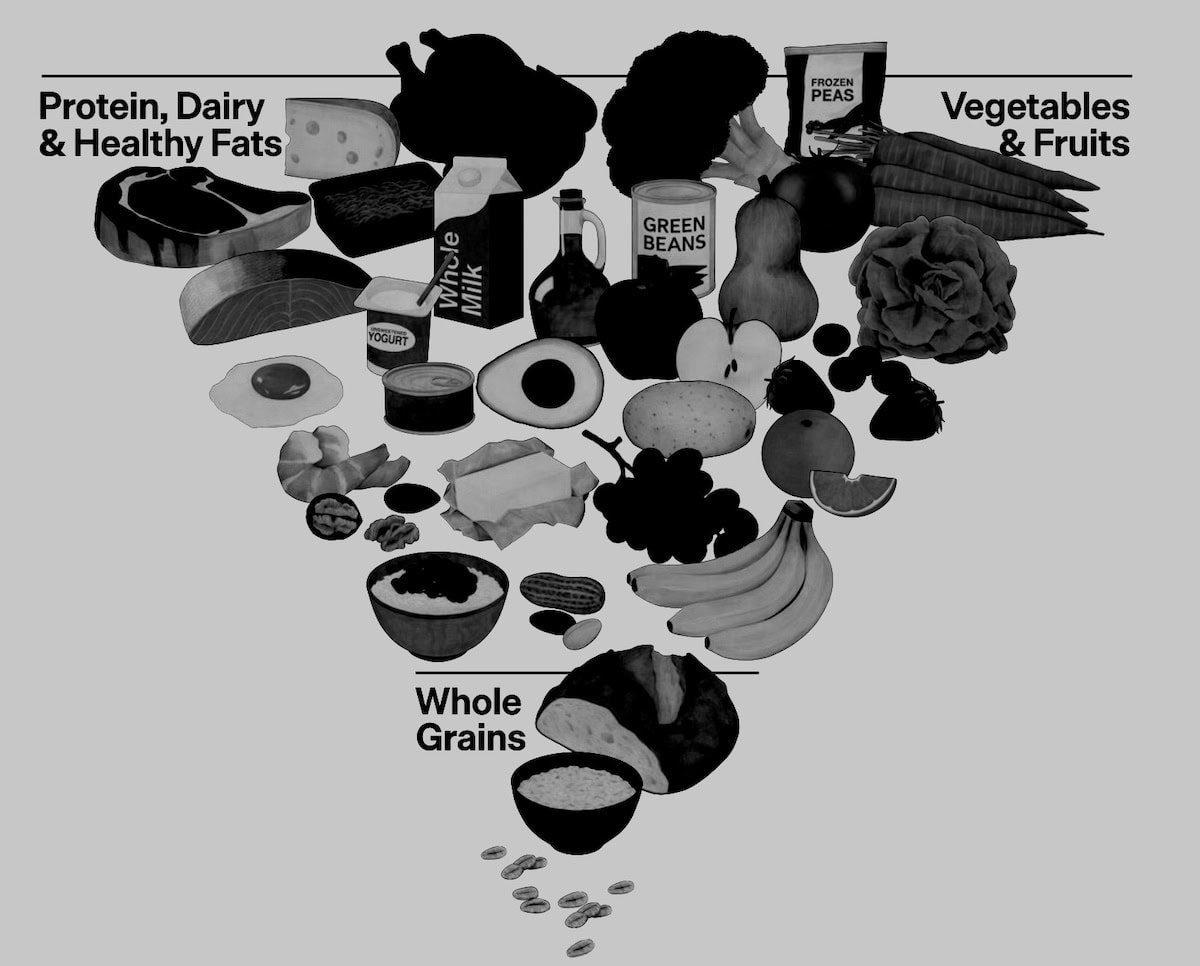
The Trump administration released the new Dietary Guidelines for Americans, and I have a few things to say.
First of all, I have never considered the U.S. dietary guidelines a good system. For one, they are influenced by certain industries, and these new guidelines are no exception. They tend to sit in a vague middle ground that, honestly, as a registered dietitian with over 25 years of experience, I realized very early on, even when I was still in college, that it is not conducive to a healthy or sustainable way of eating. I was raised on the authentic Mediterranean diet and later studied it in depth. During that period, I adopted the Mediterranean diet pyramid developed in the early 1990s to guide my patients and educate the public. So to be clear, I have never thought the U.S. dietary guidelines were something people should follow.
The Good
Now let’s start with the good.
The most obvious positive is the recommendation to avoid highly processed foods and refined carbohydrates. The U.S. diet is over 70% ultra-processed foods, and there are numerous studies pointing to their negative effects. Unfortunately, many health professionals and associations have strong ties to producers of ultra-processed foods. Convenience is often cited as the reason, along with claims that people don’t have enough time or money to eat real, healthier foods. I believe this is a narrative that benefits the food industry, not one that truly reflects reality.
Another positive is that grains and starches are no longer presented as the primary food group, as they once were in the old food pyramid or plate, where they formed the base and were meant to be consumed the most. Even when people think of the Mediterranean diet as high in carbohydrates, usually because they think of pasta, the authentic Mediterranean diet is actually about 40% carbohydrates.
The Bad
Now for the bad.
First, they talk about reducing alcohol but don’t specify how much alcohol is acceptable once you do drink. Yes, within the Mediterranean diet, wine is a component, but this does not take into account genetics, personal history, or other risk factors. Saying “less alcohol” is vague. For some people, less alcohol could mean three glasses of wine instead of a bottle, which does not necessarily make it healthy. There should be clear limits.
Another issue, which I would actually call wrong rather than bad, is how they discuss healthy fats. They mention healthy fats such as omega-3 fatty acids, but then lump fats from meat, such as beef tallow, into the same category. These fats are not the same as the fats found in olive oil, and this comparison is not accurate. Extra virgin olive oil is rich in polyphenols these other fats are not.
In addition, they state that saturated fat should not exceed 10% of total daily calories. However, their recommendations contradict this. If you are eating meat and whole-fat dairy products in the amounts recommended, you will easily surpass 10% saturated fat intake. Either this needs to be corrected, or consumers are expected to ignore it.
The Ugly
Finally, the ugly.
The biggest problem is prioritizing meat at the top of the pyramid and presenting it as a main component of the diet. Red meat, cheese, and poultry should not be among the largest food groups. Research clearly shows that high meat intake is associated with many chronic diseases. Even the older guidelines had too much meat, but in these new guidelines the recommendations have doubled.
One of the reasons the Mediterranean diet followed in the 1950s and 1960s was so healthy is precisely because meat was rarely consumed. In fact, people fasted from meat for over 200 days a year. That is the authentic Mediterranean diet. Adding more meat is leading the public to more disease, it’s that simple.
When I first saw these guidelines, I thought the same thing I’ve thought about every U.S. guideline before them: they continue to cater to the dairy and meat industries. This is evident when you look at the authors’ ties. Many have financial relationships with the National Cattlemen’s Beef Association, the National Dairy Council and more. This is not surprising.
These guidelines are not driven by science or evidence. They are driven by industry interests, personal opinions, and dietary trends.
Beyond Opinion and Industry Interests: What the Evidence Actually Supports
Among all dietary patterns studied to date, the authentic Mediterranean diet has the strongest and most consistent body of evidence supporting its role in protecting from chronic disease and promoting longevity. This is not based on opinion or trends, but on decades of research. Decades. Unlike many modern diets, its effectiveness has been demonstrated in free-living populations over generations. When followed as traditionally practiced, it outperforms other dietary patterns in both health outcomes and long-term adherence. If the goal is evidence-based nutrition, this is not a debate.
Knowing what to eat can still be tricky. The articles below provide practical, research-backed guidance on the authentic Mediterranean diet.
Photo Source: U.S. Department of Agriculture (public domain)

Excellent article, Elena! All I can say is that since switching to the Mediterranean lifestyle (following your recommendations from your book and site) from the Standard American diet guidelines, my health has improved two-fold!!! To quote my doctor at my last physical, “your labs are gorgeous!” ☺️
Elena, I follow you, your advice and recipes and Im grateful that I found your site. On your Mediterranean pyramid in the grain section potatoes are mentioned. Potatoes are not a grain. When mistakes like this are made it makes people doubt the content of the rest of the article and the one who’s writing it. Im not being narky, Im trying to be honest. A lot of people would take this as a reason to turn their backs on something beneficial. Any excuse.
I have your book. It was my eating bible which taught me how to live the Mediterranean way. Its my way of life. And Im grateful.
Marnya
Hello. I am seeing a lot of variations of the Mediterranean diet pyramid online. Can you put in a link to the one you are referring to? Not just the guidelines but the actual pyramid image. Thanks.
She shares one here: https://www.olivetomato.com/authentic-mediterranean-diet-guidelines/
This HHS seceretary has demonstrated a reliance on ideas that are not based on scientific research and fact. I would not follow these guidelines. I will continue to follow a Mediterranean way of eating!
As a non American I’m not surprised at this advice from the US. Well written article and clearly stating why something is good or bad. Elena you have helped me so much. Thank you for your book and advice on here, your website. I do share it with others.
Dear Elena,
THank you for this evaluation of the new nutrition guidelines. Have you ever designed a pictorial guide that we could post on our refrigerator doors to help keep us on track in our pursuit of the Mediterranean Diet benefits? I would love to have something that I could print out and keep on the fridge door just as a reminder of how I should be shaping my daily nutritional needs. As a visual learner it would be a great benefit.
Thanks again.
Hi Gregory, Thanks! Here are some resources you may find helpful that have visuals:
https://www.olivetomato.com/authentic-mediterranean-diet-guidelines/
https://www.olivetomato.com/the-mediterranean-diet-manifesto/
People who eat a lot of meat tend to be rather aggressive. Remind you of anyone?
This new guideline is a travesty! I agree with all your points. For those concerned about market produce, remember that frozen is a good affordable alternative.
Omg I nearly lost it when the guides were released. What a disappointment!!! In spades!!! I have been a dietitian for 50+ years and well yeah around the block . Thank you for your analysis and I hope more ppl read.
Thank you so much for taking the time to explain this all – I will stick to my Mediterranean diet (mostly) which suits me great,
Best article I have read in years, Elena! You actually should send this to someone at the White House
Thank you Nikki!
What does the Mediterranean food pyramid look like?
The links below the post will give you an explanation of the Mediterranean diet.
My problem with the Mediterranean Diet is that grocery store produce is not at all the same as the vegetables eaten in Italy et.al. Farmer’s markets and produce stands are not readily accessible for many people, nor do we know what was used to produce said veggies.
Hi Cheryl. The principle of the Mediterranean diet includes eating mostly seasonal foods. You don’t have to replicate Mediterranean vegetables, you eat whatever produce is in season and available to you. And to be realistic, people in the Mediterranean don’t always know what was used to produce the vegetables even when getting them from a farmer’s market (unfortunately).So what I am saying is that you can still follow it with standard grocery produce and get most of the benefits.
Thanks for your input. I agree with you totally. I’m so glad someone is speaking up about this bad diet the government is promoting.
Thank you Ricky!